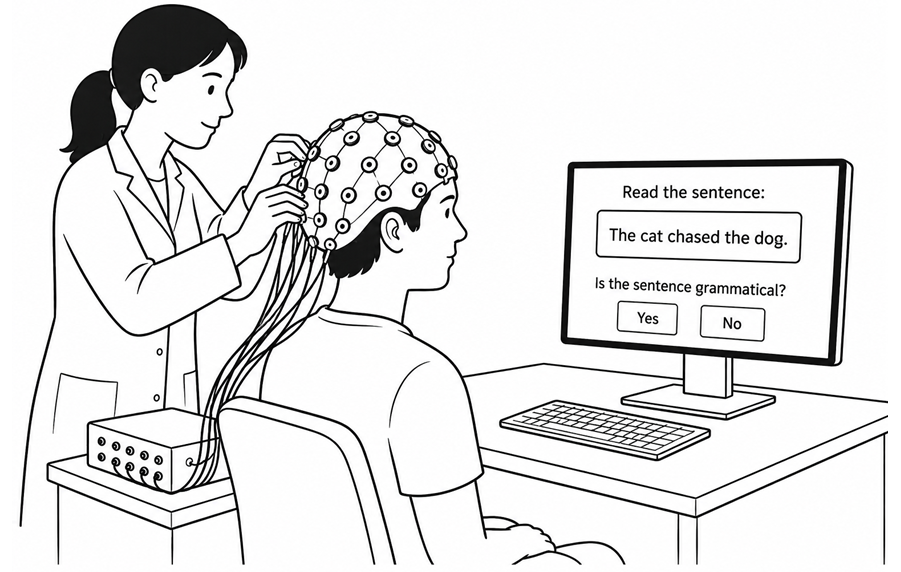
What is EEG?
Electroencephalography (EEG) is a non-invasive method used to measure the brain’s electrical activity. Small sensors are placed on the scalp using a comfortable cap. EEG is painless and safe.
Before your visit
To help us obtain high-quality recordings, please:
- Arrive with clean, dry hair.
- Do not use hair gel, wax, mousse, hairspray, or other hair products on the day of the experiment.
- Avoid using conditioner after washing your hair before the session.
- Remove large earrings and other hair accessories before the experiment.
- If you wear a wig, hairpiece, or head covering that cannot easily be removed, please contact the researcher before your appointment.
- If you have tightly braided hair or a hairstyle that may prevent the sensors from reaching the scalp, please contact the researcher before your appointment.
Please arrive a few minutes before your scheduled session.
What happens during the experiment?
A researcher will explain the study and answer any questions you may have.
The researcher will then place an EEG cap on your head and apply a small amount of water-based gel to improve the contact between the sensors and your scalp. Depending on the study, additional sensors may be placed on the face or around the eyes.
You will then complete the experimental tasks while the EEG equipment records brain activity. The researcher will be available throughout the session if you need assistance.
After the experiment
The researcher will remove the EEG cap and sensors and answer any remaining questions.
The gel used during EEG recording is water-soluble and can be easily washed out after the session. If you wish, you may wash your hair at the lab before leaving. We provide warm water, clean towels, and a hair dryer.
Frequently Asked Questions
Does EEG hurt?
No. EEG is painless and non-invasive. The sensors only record electrical activity and do not send any electricity into the body.
Will the gel damage my hair?
No. The gel is water-soluble and can be washed out with water and shampoo.
Can I participate if I wear glasses?
Yes. Most participants can wear their glasses during the experiment, although specific study requirements may vary.
What if I have questions before my appointment?
Please contact the researcher or the lab using the contact information provided in your study invitation.